

Parking Lot Drainage & Catch Basin Repair
When water pools on your lot after every Central Florida storm, the problem is rarely the surface. It is what sits underneath or around it: a settled base, the wrong slope, or a blocked or failing catch basin. Ponding water seeps into the asphalt and weakens the base, so patching over a drainage problem only buys time. We solve what is actually moving the water, so the repair holds. We correct drainage and repair catch basins on commercial lots across Kissimmee and Central Florida.
What Proper Drainage Looks Like
A lot sheds water by grade, a slope built into it on purpose. A paved surface needs a positive slope of roughly 2%, about a quarter inch of fall per foot, to carry rain to the drains before it can sit. Drop below 1% and water starts to pond no matter how new the asphalt is, which is why a flat-looking lot with one settled low spot floods while the rest stays dry. From the surface the water is meant to reach a catch basin, then travel through an outlet pipe to the municipal storm system or an on-site retention pond. When any link in that path fails, the slope, the basin, or the pipe, the water stops moving and starts working into the pavement. So we read the whole path rather than the puddle alone.
How We Diagnose and Correct Drainage
Ponding is a symptom. We work back to the cause before we touch the surface, because a lot that ponds again next season was never fixed.
- Diagnose why the water sits: base settling, improper slope, a blocked or poorly located catch basin, or an old overlay that trapped water instead of shedding it.
- Repair or rebuild the catch basin to match the damage, from a concrete-ring replacement to a top-half rebuild to a full rebuild.
- Where regrading the whole lot is not viable, install trench drains or rip-rap swales with buried 4-inch slotted pipe to redirect water to the storm system with shallow trenching.
- Restore the surrounding asphalt or concrete so the surface flows smoothly toward the structure instead of away from it.
What We Use
- Catch-basin components: a steel grate over a precast concrete sump and rings, tied to an outlet pipe that carries runoff to the municipal storm system or a retention pond.
- Trench drains and slotted pipe: a narrow linear surface drain, or a buried 4-inch slotted pipe in a rip-rap swale, for loading docks, entrances and low spots where a conventional basin will not fit.
- Surface restoration: asphalt and concrete to rebuild the area around the structure so the finished grade sheds water toward the grate.
What Goes Wrong Without It
- Standing water eats the base: ponding and birdbaths seep through the surface and weaken the base underneath, and a weak base cracks and fails faster than a dry one.
- Sinkholes near the basin: when a pipe to or from a basin collapses, water erodes the base around it and the surface caves in. A sinkhole by a grate is a failing structure that needs a structural repair.
- A clogged basin backs up: sand, rock and trash obstruct the drainpipe, so even a sound basin overflows and the lot floods where it should drain.
Why Central Florida Punishes a Bad Slope
Central Florida rain does not arrive gently. Summer storms drop a heavy volume in a short window, so a lot that drains slowly does not get the chance to dry before the next one. Sandy subgrade settles and shifts the slope that was designed into the lot, and a settled low spot that would shrug off a light shower turns into a standing pool here. Every hour that water sits, it is working into the base. That is why we treat a drainage fix as structural work that protects the base. Correcting the slope and clearing the basin does more to extend the surface than any amount of patching over the same wet spot. For the full picture, see fixing standing water and how a soaked base leads to subbase failure.
Fixing drainage protects the surface above it. Once the water problem is solved, we follow up with patching and fresh sealcoating so the repaired area is protected. Request a drainage assessment.
Request a Drainage Assessment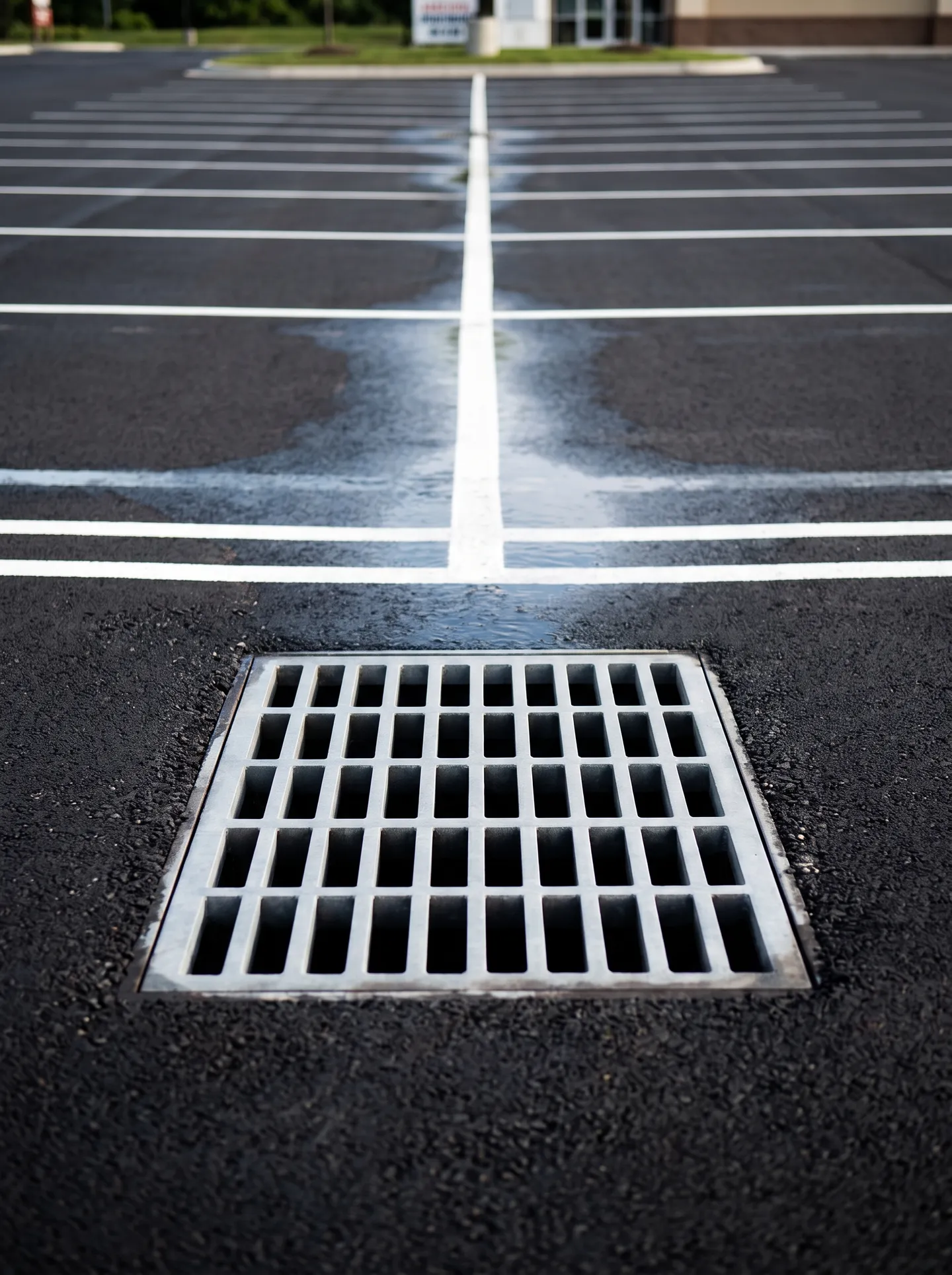

Drainage & Catch Basin FAQs
Ponding water works into the asphalt and weakens the base, accelerating cracking and failure. It also undermines your surface work: fresh striping and sealcoat will not bond or cure over a spot that stays damp, so a drainage problem quietly shortens the life of every repair sitting near it.
Often, yes. Trench drains, rip-rap swales with buried 4-inch slotted pipe, and tying into existing catch basins can redirect water with shallow trenching instead of full reconstruction.
Warning signs include ponding around the grate and sinkholes near the basin, which form when the pipes collapse and water erodes the base. See fixing standing water.
A catch basin is a grate over a built concrete sump tied to an outlet pipe, collecting runoff at a point. A trench drain is a narrow linear drain that collects water across a wide area, used at loading docks and entrances or where a conventional basin will not fit.
At three levels, matched to the damage: a concrete-ring replacement for the top, a top-half rebuild, or a full rebuild when the whole structure has failed. We choose the least invasive repair that actually holds.
Sand, rock and trash obstruct the drainpipe, so runoff has nowhere to go and backs up over the grate. A sound basin still floods when its outlet is blocked, which is why clearing the pipe is part of the repair.
It removes the cause. Chronic ponding is a common driver of alligator cracking, the interconnected web of cracks that signals the base under a low spot has gone soft, and that web is where potholes open next. Correct the slope and drainage first, then patching and sealcoating on the repaired area actually hold.
As a regional figure, commercial drainage corrections commonly land in a $5,000 to $20,000 range, well under the cost of tearing up and replacing a full lot. Trench drains, relief basins and buried slotted pipe redirect water with shallow trenching, so you treat the actual problem instead of paying to repave over it.