

HOA & Subdivision Lot Maintenance
For most associations, the roads and parking areas are the single largest physical asset the board answers for. And they are private, so the association owns the upkeep and the bill. Community roads are rarely built to local DOT standards, so their markings and surface need a plan that stays ahead of the potholes. We maintain HOA and subdivision lots, community roads, sidewalks and common areas across Kissimmee and Central Florida: striping, sealcoating and repair on a schedule the reserve fund can see coming. We keep the pavement you have safe, marked, sealed and protected on a schedule your board can plan around.
How We Work With HOA Boards
- Assess the condition of private roads, lots, sidewalks and markings to inform a reserve study of current condition and future needs.
- Match maintenance treatments to condition, from crack sealing and patching to sealcoating and restriping.
- Bring clubhouse, pool and amenity lots up to ADA accessible-stall and signage standards.
- Sequence preventive work first to defer the larger cost of full reconstruction, and phase it against the reserve fund.
What the Maintenance Covers
- Crack sealing and patching: rubberized crack sealant and asphalt patches that keep water out of the roads and lots. A properly routed and sealed crack holds water out for 3 to 8 years, so small failures stay small.
- Sealcoating: asphalt-emulsion sealer over the community's lots and drive lanes, reapplied every two to three years to shield the surface from water, oils and UV. A maintained sealcoat program can more than double the life of the asphalt underneath it.
- Restriping and ADA markings: reflective traffic paint for lot stalls, drive-lane markings and the accessible stalls and signage at clubhouse, pool and amenity lots.
- Concrete for common areas: concrete and curbing for community sidewalks and curbs where a slab has failed or a curb ramp needs to meet ADA geometry.
What Goes Wrong Without a Plan
- Private roads wear faster: community roads are often not built to local DOT standards, so they deteriorate faster and need more maintenance to keep up.
- Potholes turn into claims: missing pavement and open potholes damage residents' vehicles and create litigation exposure the board answers for.
- Underfunded reserves: when the reserve has not built up ahead of the work, the board cannot cover remediation the year it comes due, and the cheap fix has already become the expensive one.
How Should a Board Budget for It?
Start with a reserve study. It assesses the current condition of the roads, lots and sidewalks and the future work they will need, and that becomes the basis for a structured funding plan with incremental dues so reserves accumulate before major work is due. Florida law lines up with that discipline: under Chapter 720.303 of the statutes, once an association funds reserves, each component is calculated on its remaining useful life and current replacement cost, and a private road or parking lot is exactly that kind of component. From there the sequence is simple: preventive work first, because the cost of addressing minor deficiencies is far less than addressing major ones. Regular crack repair and sealcoating extend asphalt life and defer the larger upfront cost of full reconstruction, while phased capital projects line up against the reserve fund instead of landing all at once. Central Florida makes the case sharper. The constant sun and heat harden the surface, and heavy summer rain drives water into every unsealed crack, so the community that seals and stripes on a schedule spends less over the life of the pavement than the one that waits for a pothole to force the conversation. See how to plan and fund HOA road maintenance.
The smartest HOA budgets pair preventive maintenance with phased work. A pavement management program keeps the whole community on a schedule, sealcoating protects what you have, restriping keeps roads and lots legible, and crack sealing and patching stops small failures before they spread. Request a reserve-friendly quote.
Request a Reserve-Friendly Quote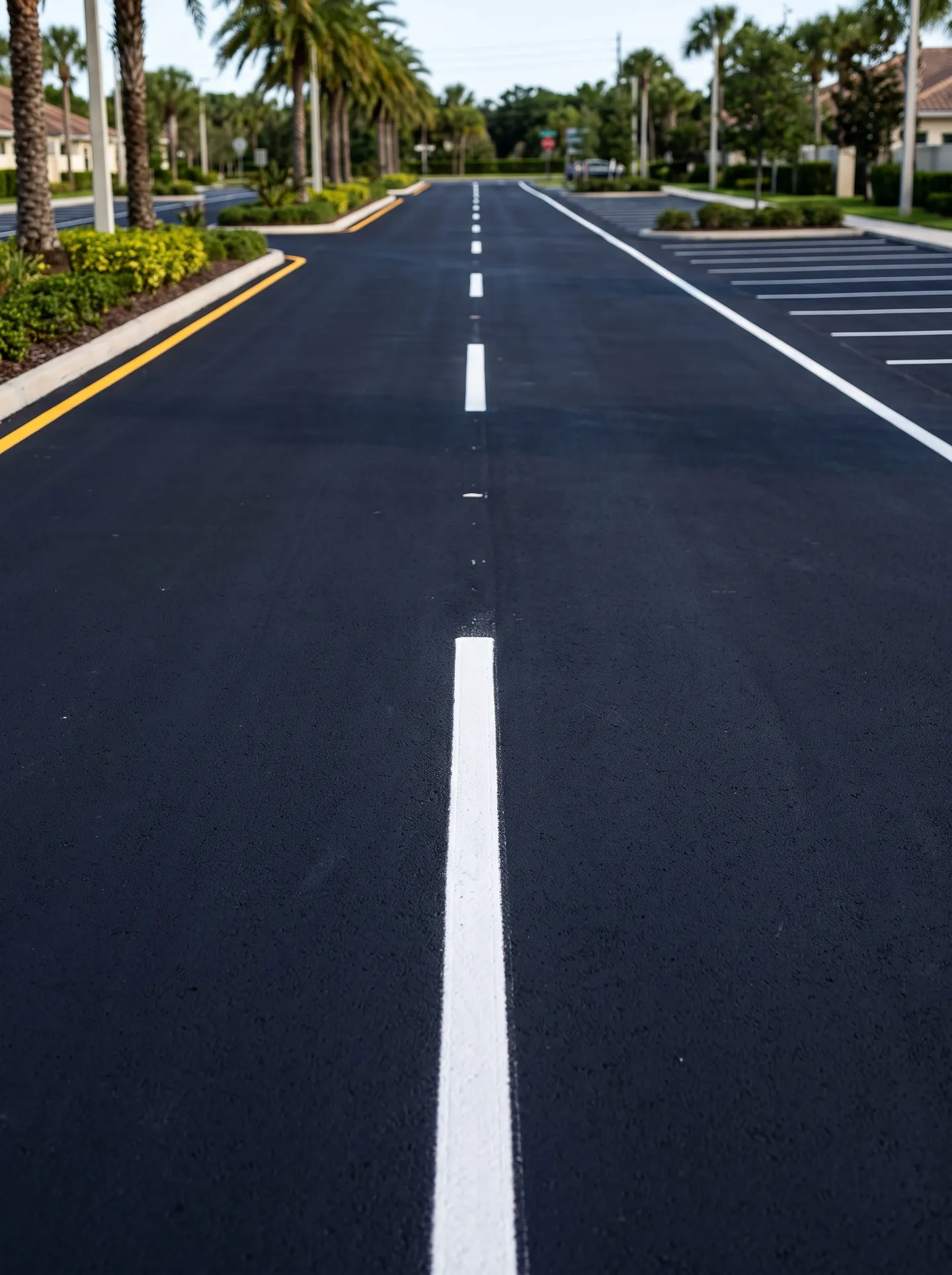

HOA Maintenance FAQs
The HOA. Private roads are often not built to local DOT standards, and keeping them maintained is a primary public-safety responsibility of the association.
Start with a reserve study that assesses current condition and future needs, then build a structured funding plan with incremental dues so reserves accumulate before major work is due. See HOA road maintenance funding.
Regular crack sealing and sealcoating significantly extend asphalt life and reduce the cost of major repairs, while neglected potholes can damage residents' vehicles and create litigation exposure.
Yes. We phase striping, sealcoating and repairs section by section and work off-hours where it helps, so entrances, amenity lots and drive lanes stay usable while each area cures. The community gets maintained with minimal disruption to residents.
Not on their own. The structural integrity reserve study that made headlines applies to condominium and cooperative buildings, not to Chapter 720 homeowner associations. What Chapter 720.303 does require is that once your board funds reserves, each component, roads and lots included, is calculated on its remaining useful life and current replacement cost, which is exactly what a reserve study produces.
Yes. We restripe amenity lots to ADA accessible-stall and signage standards, sizing and counting accessible spaces and marking the access aisles and symbols correctly.
Restriping. The Central Florida sun fades traffic paint, so drive-lane markings and lot stalls need periodic restriping to stay readable, and the cheapest time to do it is right after a sealcoat.
The board is left unable to cover remediation the year it is needed, and preventive work that was deferred has usually grown into full reconstruction. A reserve study and incremental dues build the fund before the bill arrives.