

Commercial Asphalt Repair & Pothole Patching
Almost every pothole starts the same way. Water gets into the pavement, weakens the base, a crack opens, and the crack becomes a crater. The fix is to match the method to the failure, and to do it before a small problem turns structural. We repair commercial lots across Kissimmee and Central Florida, from rubberized crack sealing to infrared, spray-injection and permanent full-depth patches.
Matching the Repair to the Failure
- Crack sealing: we clean the crack with high-pressure air or a hot-air lance, set backer rod where it runs deeper than 2 inches, and fill bottom-to-top with rubberized asphalt kept just below grade. A proper seal lasts 3 to 8 years and keeps water out of the base.
- Infrared patching: for surface distress over a sound base, we heat the existing asphalt in place, work in fresh mix, and recompact for a thermally bonded repair with no cold joint. Where the asphalt has oxidized gray, we blend in a rejuvenator to bring its flexibility back.
- Spray-injection: a truck-fed repair that blows the area clean, lays a tack coat, and fills with aggregate and emulsion in one pass, effective even in damp or cool weather.
- Throw-and-roll: a fast semi-permanent patch for a pothole that cannot wait, filled and compacted to a slight crown so traffic seats it, then scheduled for a permanent repair in a dry window.
- Full-depth patching: when the base has failed, we saw-cut a square-edged patch at least a foot into sound pavement, tack the vertical faces, and backfill dense-graded hot mix in compacted 4-inch lifts. This is the permanent fix.
The cheapest repair is the one you prevent. Sealing cracks early plus sealcoating keeps water out, and where standing water is the real culprit, drainage correction solves it at the source. When distress is spreading lot-wide, a pavement management plan sequences the fixes before they compound. Request a repair assessment.
Our Repair Process, Step by Step
- We assess the distress first and trace it to its cause, because the right fix for a hairline crack is the wrong fix for a failed base.
- We seal the cracks while they are still cracks, before water reaches the base and opens them into potholes.
- We patch the potholes that sit over sound pavement, matching infrared, spray-injection or a throw-and-roll repair to the weather and the urgency.
- We cut out and rebuild the spots where the base itself has given way, working up from firm support rather than bridging over it.
- We overfill so traffic seats the patch, check it flat with a straightedge, and restripe any markings the repair crossed.
What We Use
- Hot-mix and cold patch: dense-graded hot-mix asphalt for permanent full-depth patches, and cold patch for a temporary any-weather repair when a hole cannot wait.
- Rubberized crack sealant: hot-poured rubberized asphalt and emulsions for sealing cracks, with compressible non-shrinking backer rod set into the deep ones.
- Tack coat and clean stone: tack coat on the vertical faces of a patch so the new material bonds instead of pulling away, and angular crushed gravel to backfill the deepest potholes.
What Goes Wrong Without It
- A claim waiting to happen: an open crack or a pothole is a liability, from a tripped pedestrian to a bent rim, and the repair costs a fraction of the incident it invites.
- Bad joints: a patch that is not square-edged or skips the tack coat fails at its edges, so the repair comes apart faster than the pavement around it.
- Surface-only fixes: patching the top when the base has failed only buries the problem. A permanent fix cuts out the failed material and rebuilds from a solid base.
Why Central Florida Lots Crack Sooner
Water is the enemy of asphalt everywhere, and Central Florida sends plenty of it. Summer downpours drive water into every open crack, and a lot that ponds after a storm keeps the base saturated long after the sky clears. Our heat does its own damage, baking the surface gray and brittle until it ravels and drinks water in faster. Freeze-thaw barely factors here; the pressure comes from moisture and heavy delivery traffic working a soft base. The takeaway is timing: seal cracks as they open and correct standing water before the base gives, because a minor repair costs a fraction of a structural one. Pairing repair with sealcoating keeps water out on the flat between the cracks.
Request a Repair Assessment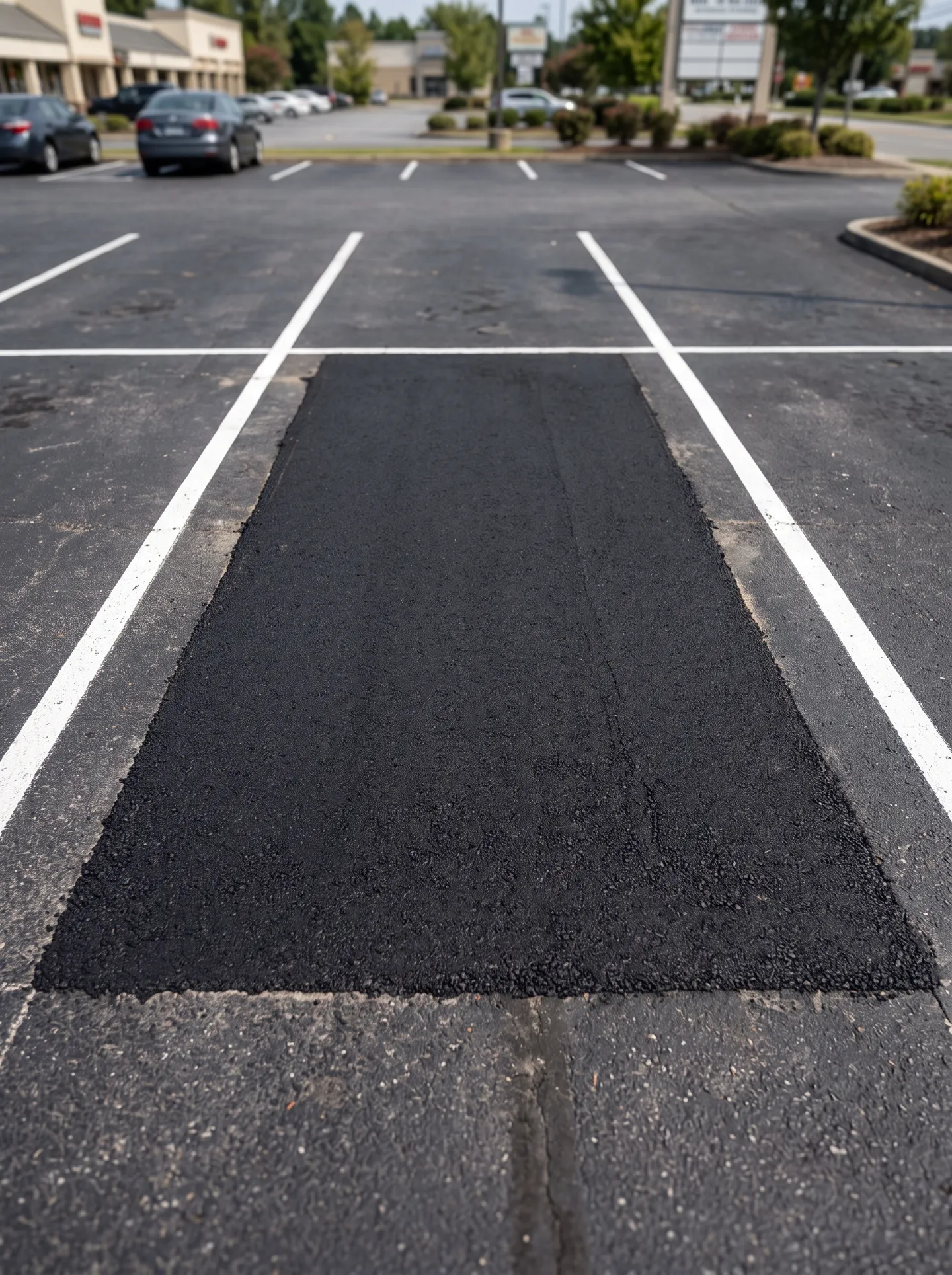

Repair & Patching FAQs
Water, mostly. It works under the surface and weakens the base until the pavement above loses its support. In Florida the trigger is rain and heavy load rather than the freeze-thaw of colder states, and interconnected alligator cracking is the early sign a spot is close to giving way.
Crack filling is a quick pour of liquid asphalt that buys time. Sealing is the durable fix: we clean the crack, then fill it with rubberized asphalt that flexes as the crack moves, best applied in spring or fall when cracks sit mid-opening. A proper seal holds 3 to 8 years.
When the base itself has failed. The tells are interconnected alligator cracking, patches that keep sinking, and potholes that return in the same spot. Then we cut out to firm support and rebuild, rather than patch over a base that cannot hold it.
Deferred pothole repair raises a property owner's premises-liability exposure. See who is liable for pothole damage.
A truck-mounted heater warms the existing asphalt a few inches down so the crew can rework it in place, blend in fresh mix and a rejuvenator, and recompact it. Because it reuses the asphalt already there, the repair bonds cleanly with no cold joint to fail at.
Yes, within limits. Spray-injection, throw-and-roll and cold patch all hold up in damp or cool conditions for a fast semi-permanent fix, so a hazard gets handled the same day. A permanent full-depth patch and crack sealing still want a dry window, ideally spring or fall.
Almost always because the water feeding them was never dealt with. A surface patch over a wet, failing base lifts again within a season. The lasting fix rebuilds from firm support and, where the lot ponds, corrects the drainage that keeps the base soaked.
Addressing minor deficiencies costs far less than major ones. Timely crack sealing and patching defer the cost of reconstruction, which is the core of a pavement management plan.