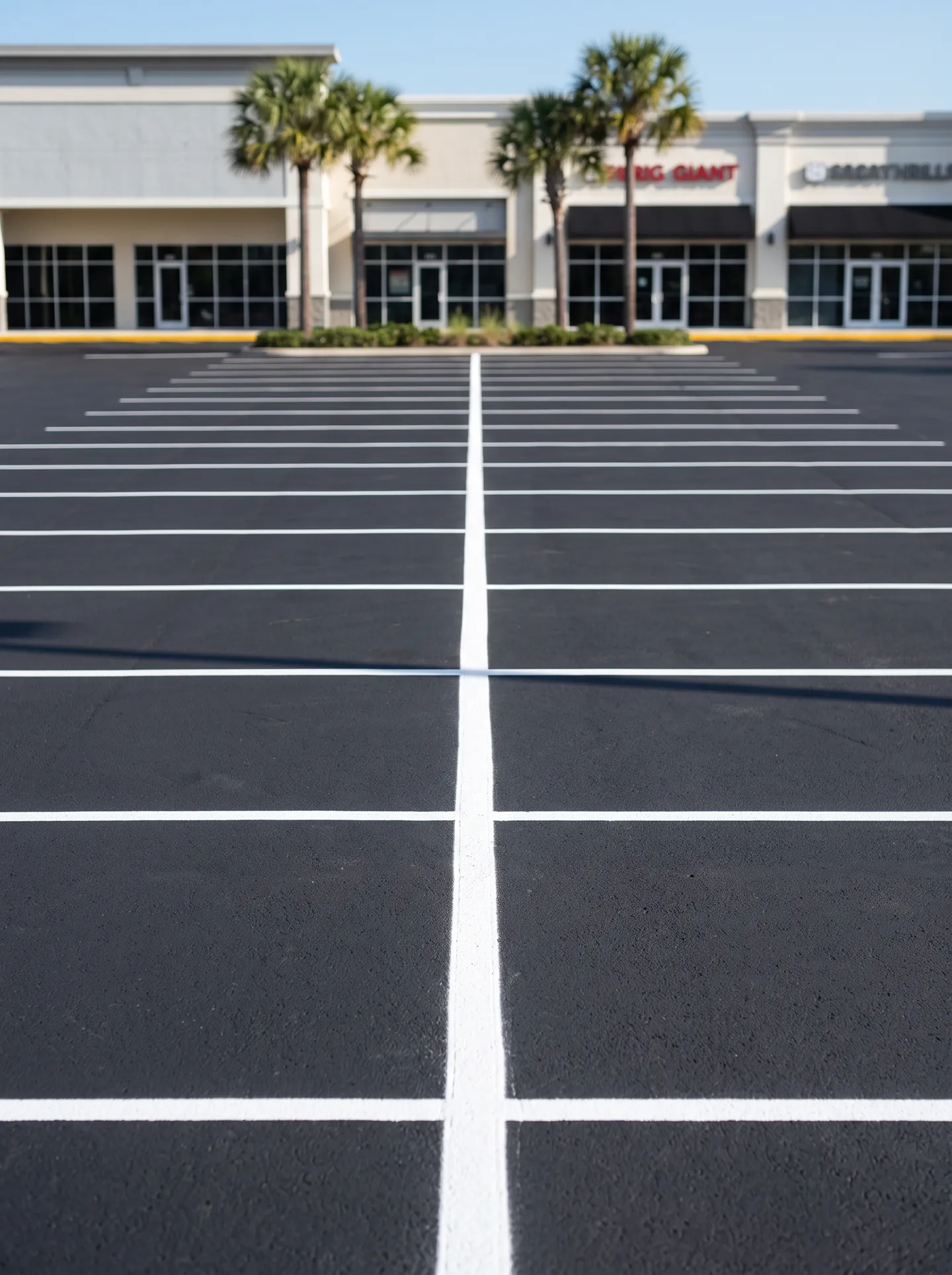
Commercial Parking Lot Striping in Winter Park, FL
Winter Park's commercial heart is its storefronts: the Park Avenue district, Hannibal Square, and Winter Park Village, where the look of the lot is part of the shopping experience. Here, striping is as much about appearance and timing as anything. A faded, cracked lot pulls down the whole block. We stripe, seal and maintain boutique-retail and mixed-use lots across Winter Park with crisp, ADA-compliant work, done in phases that keep customer parking open.
Why Do Winter Park Lots Need a Local Approach?
A premium retail district sets conditions a generic crew walks right past. We work to them:
- Karst subsurface, real subsidence history: the limestone aquifer and a documented sinkhole history make subgrade evaluation essential here. The 1981 Winter Park sinkhole on Denning Drive opened about 320 feet wide and 90 feet deep, so we check the base before patching or restriping over a suspect one.
- High water table by the lakes: strong summer storms and about 51 inches of annual rain fall on low ground near the interconnected Chain of Lakes. Drainage and grading are critical on high-use lots here.
- Heat and UV on storefront lots: prolonged subtropical sun oxidizes the sealcoat and fades traffic paint on premium-district lots. Sealcoat and restripe cadence carry the storefront's appearance.
- Stop-and-go boutique traffic: constant turning and braking at boutique-retail and mixed-use lots scuffs striping and wears the entrances and drive aisles first.
- Appearance and canopy: the historic-district context demands crisp striping, clean edges and a finish that blends with the streetscape, including protecting mature tree canopy and roots next to the pavement.
- Small, high-value footprints: boutique-retail lots are compact and storefront-facing, so an efficient stall grid and a clearly marked accessible route matter on a tight footprint where every space counts.
Striping Without Closing Your Storefront
On Park Avenue, a closed lot is lost business. We phase restriping and sealcoating and work after hours, so customer parking stays open through the day. We finish with clean lines and ADA-compliant stalls that suit a premium storefront. Where the subgrade is in question, we evaluate the base first and stripe only once it checks out.
- Repair on a suspect base: we saw-cut a square-edged, full-depth patch at least a foot into sound pavement, and on any lot with a settlement history we probe the base first so the repair rests on solid support.
- Drainage by the Chain of Lakes: catch-basin repair and trench drains clear the ponding that a high water table pushes onto low storefront lots and works into the pavement base.
- Concrete and canopy-safe ramps: curb ramps, curbs and sidewalks to accessible geometry, a 1:12 maximum ramp slope and truncated-dome warnings, set to protect mature roots and blend with the streetscape.
- A quiet maintenance schedule: a pavement management plan surveys the district's lots yearly and schedules small, low-disruption treatments before anything grows into a storefront-closing repair.
What Kind of Winter Park Lots Do We Work On?
Winter Park is one of the metro's most affluent addresses, with median family income around $130,000, so its commercial pavement is premium and storefront-facing. Still, the district holds a few property types, each with its own demand.
- Boutique storefront retail: the Park Avenue district runs on appearance, so we work after hours, hold crisp 4-inch lines and clean edges, and keep the accessible route clearly marked on a compact lot.
- Mixed-use retail and dining: Winter Park Village and Hannibal Square carry higher turnover and pedestrian traffic, so clean crosswalks, directional arrows and compliant ADA stalls guide the flow.
- Campus-adjacent lots: lots near the Rollins College area see heavy pedestrian volume, so marked crossings and accessible routes counted to the federal table keep foot and vehicle traffic separated.
- Historic residential and community lots: private lanes, amenity parking and sidewalks in the historic residential context need HOA lot maintenance on a planned schedule, with the canopy and streetscape protected.
Commercial Corridors We Serve in Winter Park
- Park Avenue district: the downtown boutique-retail core
- Hannibal Square: the historic West Side mixed-use commercial area
- Winter Park Village: the mixed-use retail and dining district off Orlando Avenue
- Orange Avenue (SR 527) and US 17-92: commercial corridors
- Fairbanks Avenue, Aloma Avenue (SR 426) and Lee Road (SR 423): cross-town commercial frontage
Why Keep a Storefront Lot Sharp?
Central Florida sun and stop-and-go traffic push the intervals shorter here. Sealcoat every two to three years to hold the finish, restripe roughly every 18 to 24 months before the lines dull, and seal cracks the week they open, since a rubberized seal lasts three to eight years and keeps water out of the base. On a premium block the tells show early: a graying surface, a faint accessibility symbol, hairline cracks at the edges.
In a premium district, a faded, cracked lot drags down the businesses around it. Scheduled sealcoating, crack sealing and restriping keep Winter Park lots sharp and safe and push major reconstruction further out. Review the best time of year to sealcoat, then request a free quote.
Request a Free Quote