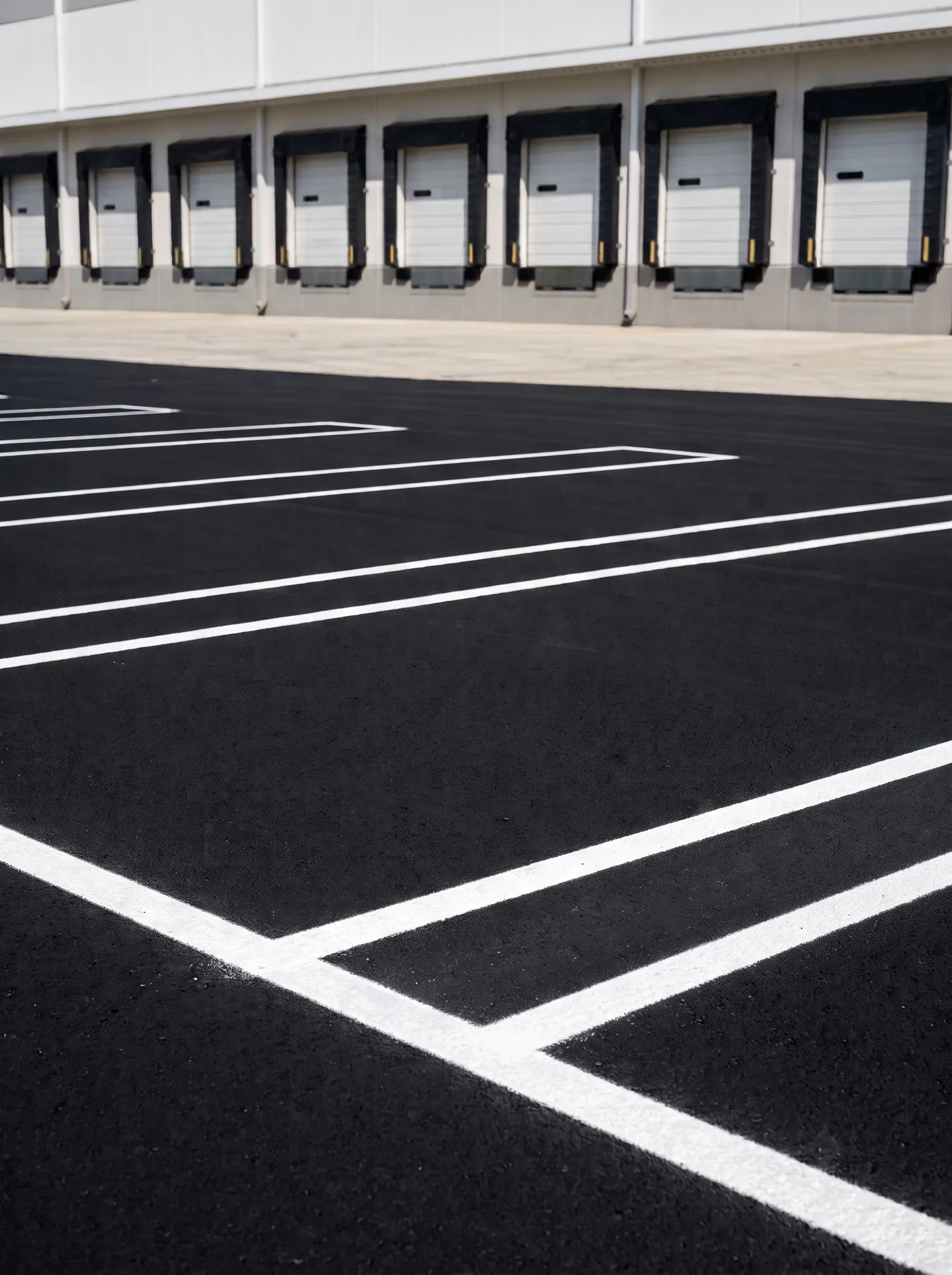
Commercial Parking Lot Striping in Apopka, FL
Apopka is one of Orlando's fastest-growing industrial corners. The Wekiva and SR-429 submarket near the municipal airport is filling with warehouse and distribution yards, while the historic US-441 corridor carries the city's retail. Those yards run on truck and forklift traffic, and it scuffs striping and grinds down sealcoat fast. We stripe, seal and maintain heavy-duty commercial lots across Apopka, scoped for the traffic they actually carry.
Why Do Apopka Lots Need a Local Approach?
Large industrial yards on sandy lowland soils, in a market growing this fast, wear in a distinct pattern. We plan for it:
- Truck and forklift loads: heavy axle and point loads on distribution and warehouse yards wear striping and sealcoat hardest at docks, aprons and turn lanes. They also open cracks, and we seal those before they spread.
- Heavy seasonal rain: 50 inches of annual rain, with intense June-to-August downpours, ponds on big lots. It lifts fresh paint and speeds potholing where slope and drainage fall short.
- Relentless sun on open lots: subtropical UV and heat oxidize sealcoat and fade traffic paint across wide-open parking and industrial lots. Both call for a regular reseal and restripe.
- Sandy lowland subgrade: sandy soils and a high water table near the Lake Apopka lowlands undercut base stability, producing settlement and cracks that we patch before a clean restripe.
- Rapid growth and expansion: fast growth along US-441 and the Wekiva / SR-429 submarket brings new lots and expansions online steadily, each needing striping, ADA layout and sealcoating.
- Hurricane and storm flooding: tropical-storm wind and flooding can undermine a lot's base and leave debris damage across a wide industrial footprint, on top of the ordinary wet-season toll. It calls for a hard look at the base after a big storm.
Striping for Heavy-Duty Truck and Forklift Yards
A distribution yard lives or dies on its markings and its surface. Trucks and forklifts wear lines and sealcoat fast where they turn, brake and dock. So we lay durable striping for truck routes and loading zones, then protect the surface with sealcoating and crack repair, from a warehouse apron to retail frontage on US-441.
Heavy point loads at a dock can fail asphalt all the way to the base. When that happens, a surface skim will not hold. We saw-cut a square-edged full-depth patch at least a foot into sound pavement, tack the vertical faces, and backfill dense-graded hot mix in compacted 4-inch lifts, so the repair carries the weight instead of sinking again. Then the loading markings, arrows and fire lanes go back down under the MUTCD color convention. For an operator running several yards at once, a pavement management program keeps every lot on one inspection and treatment schedule, so heavy-traffic zones get caught before a crack turns into a crater.
What We Stripe Across Apopka's Property Types
Apopka's commercial lots split into a few clear types, and each asks for a different scope:
- Distribution and warehouse yards: in the Wekiva and SR-429 submarket, forklift and trailer traffic runs from dock to gate. We keep the truck lanes and dock aprons marked and patched to carry that weight, since a point load at a dock can fail asphalt clear to the base.
- Growth-corridor lots on US-441: as the corridor keeps expanding, new plazas and pad sites come online needing a first layout. Near the West Orange Trail bridge, where trail and retail traffic mix, we keep the entrance lanes legible.
- Lakeside and lowland lots: commercial sites toward the Lake Apopka lowlands, one of Florida's largest lakes, sit on sandy, high-water-table ground. We patch the settlement and correct the drainage before a clean restripe.
- Airport-area employment lots: where employee parking meets truck traffic, we separate the two flows with clear striping and place accessible stalls on the shortest route to the entrance through ADA-compliant striping.
Commercial Corridors We Serve in Apopka
- Wekiva / SR-429 submarket: the industrial and warehouse-distribution area near the municipal airport
- US-441 (historic Main Street): the retail and commercial corridor
- SR-414 (John Land Apopka Expressway): a primary commercial connector
- Orlando Apopka Airport area: the municipal-airport industrial-employment district
Maintenance for High-Load Lots
Industrial lots fail fastest where a small crack lets water reach a heavily loaded base. Crack sealing, sealcoating and prompt patching guard that base and push out bigger repairs on yards that cannot afford downtime. The intervals run short here under the heat and axle loads: reseal every two to three years, restripe roughly every 18 to 24 months, and seal cracks the week they open, since a proper seal keeps water out of the base for three to eight years. Caught early, a minor crack costs a fraction of the pothole it becomes.
On a working yard, these are the tells that a lot needs attention before the next storm:
- Rutting in the truck lanes: wheel-path grooves and shoving where trailers turn mean the surface is fatiguing and due for a hard look.
- A gray, raveling surface: oxidized asphalt sheds aggregate and turns brittle. That is the sealcoat calling for a refresh.
- Ponding at the docks: standing water at a loading zone works into the base fast under heavy loads and needs drainage correction.
- Faded loading and fire-lane markings: lines a driver cannot read raise liability and slow the flow. It is time to restripe.
See the best time of year to sealcoat, then request a free quote.
Request a Free Quote