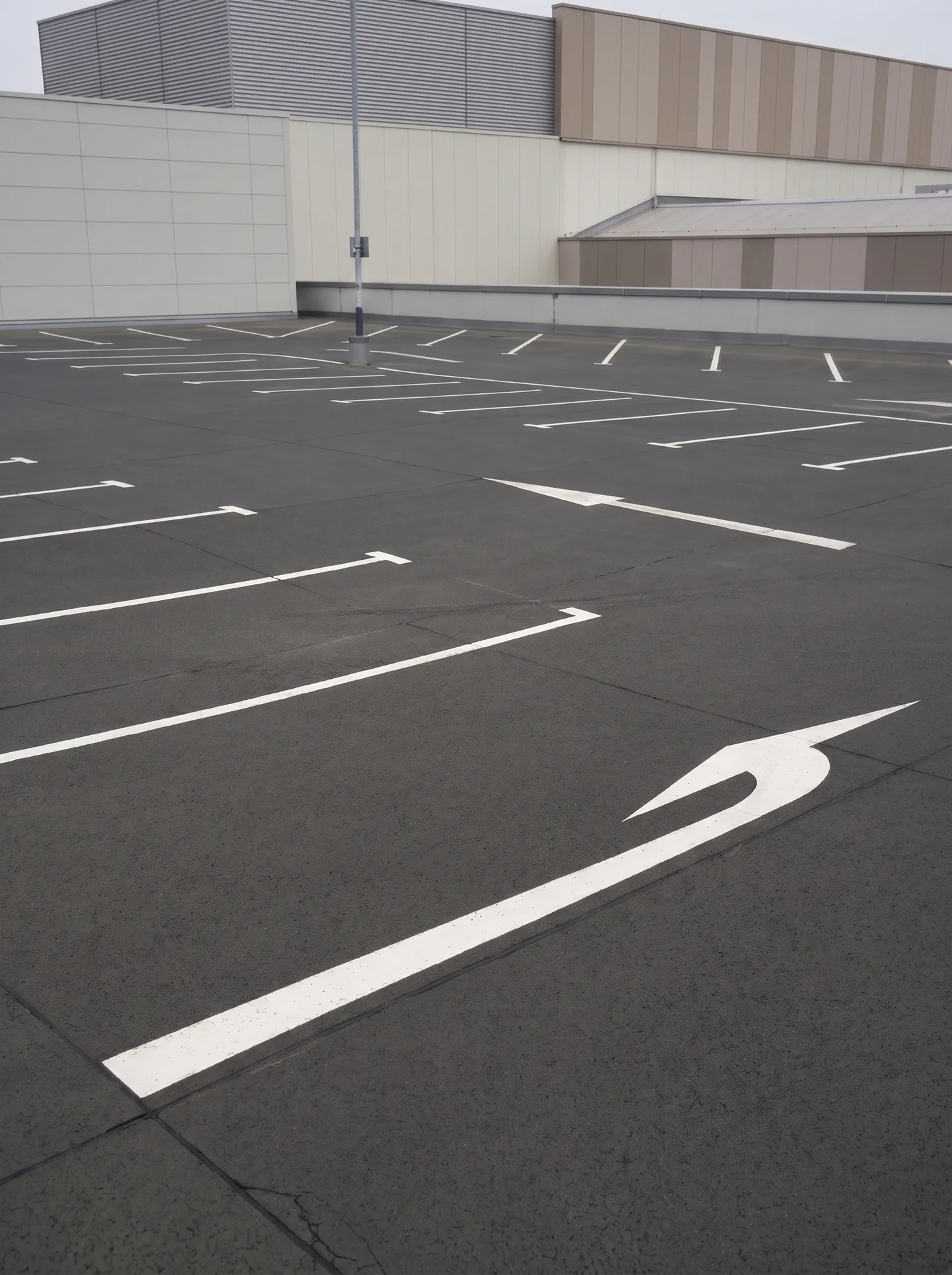
Parking Lot Striping Cost Per Space in Central Florida
Striping is one of the cheapest improvements you can make to a commercial lot, and one of the most visible. Scope swings widely with layout and paint, so contractors quote it a few different ways. Here is what the numbers really look like, and what moves them.
The Common Ways Striping Is Priced
- Per linear foot: standard traffic paint runs about $0.20 to $0.50 per linear foot of line. Longer-lasting thermoplastic sits higher, roughly $0.60 to $0.75 per linear foot.
- Per stall: a simple reline of an existing stall lands around $5 to $10 per space, with more complex layouts higher.
- Per square foot: for a full layout, striping is sometimes figured at roughly $0.06 to $0.16 per square foot, and up to about $0.25 for cross-hatching and accessibility zones.
As a benchmark, a straightforward reline of a 100-stall lot commonly falls in the $800 to $1,000 range. Yours can land above or below that, depending on the factors below.
What Drives the Price?
- Reline vs. new layout: repainting existing stalls is faster and cheaper than laying out a lot from scratch, which means measuring and chalking every line.
- Paint type: standard traffic paint is cheapest up front, while thermoplastic costs more but holds five to eight years against one to two.
- Stencils and markings: the ISA accessibility symbol, arrows, fire lanes and lettering add stencil labor beyond plain stall lines.
- ADA and cross-hatch zones: accessible stalls, striped access aisles and cross-hatching cost more per square foot than standard lines, because they take more layout precision and detail work.
- Surface condition: a lot that needs sweeping, crack repair or sealcoating first carries that prep cost. Sealing and striping together is the most efficient way to buy both.
The only way to a real number is to price your actual layout. We measure the lot, factor the paint and any ADA work, and hand you a clear scope. Request a striping quote for your Central Florida property.
Why Sealcoating and Striping Belong on One Invoice
The most efficient dollar in striping is the one you spend right after a seal. Sealcoating covers the old lines, so every seal ends with a restripe anyway, and the surface is already swept, repaired and dry. Book them together and you pay for prep once instead of twice. Sealing and striping on the same visit is the cheapest way to buy both a protected surface and sharp lines.
What You Are Buying When You Pay More for Thermoplastic
The gap between paint and thermoplastic is a gap in material, and that explains the price. Traffic paint goes down as a thin liquid film, roughly 15 mils wet, while thermoplastic is melted on as a 90 to 125 mil ribbon, several times thicker, with reflective glass beads made to a federal spec embedded through it. That thickness and the beads are why thermoplastic reads in headlights and holds five to eight years, so on a high-wear crosswalk or drive lane it can cost less per year of service even at the higher rate. A common approach keeps standard paint on the stall lines and puts thermoplastic only where the traffic earns it, so you pay for durability where it pays back.
Why Small Lots Cost More Per Stall
Every striping job carries a base cost before the first line goes down: crew, the airless machine, materials and any traffic control to work safely around your hours. That setup spreads across however many stalls are on the lot, so a small pad site costs more per space than a big retail center painted in the same product. It is the same reason the per-stall figures only hold on a decent-size lot. When a job is small, expect the quote to reflect that fixed setup rather than the low end of the per-stall range.
Common Questions
- Why is my quote higher than the $5 to $10 per stall figure? That figure is for a simple reline of existing stalls on a decent-size lot. A fresh layout, ADA zones, cross-hatching, stencils, surface prep or a small lot all push it up.
- How long is the lot closed for striping? Water-based traffic paint dries to no-track in about 15 to 45 minutes, and most lots reopen within one to two hours, so a reline is usually a short closure staged around your hours.
- Do accessible stalls cost more to stripe? Yes. ADA stalls, striped access aisles and cross-hatching run higher per square foot, up to about $0.25, because they take more layout precision and stencil work.
- Can I cut cost by striping it myself? Purpose-made traffic paint and an airless machine are what make lines bond and stay crisp. Ordinary acrylic or latex will not adhere to asphalt, so a low-cost DIY line tends to fail fast.
Related Guides
- How Often Should You Restripe a Commercial Parking Lot?
- Commercial Sealcoating Cost Factors in Central Florida
- All resource guides