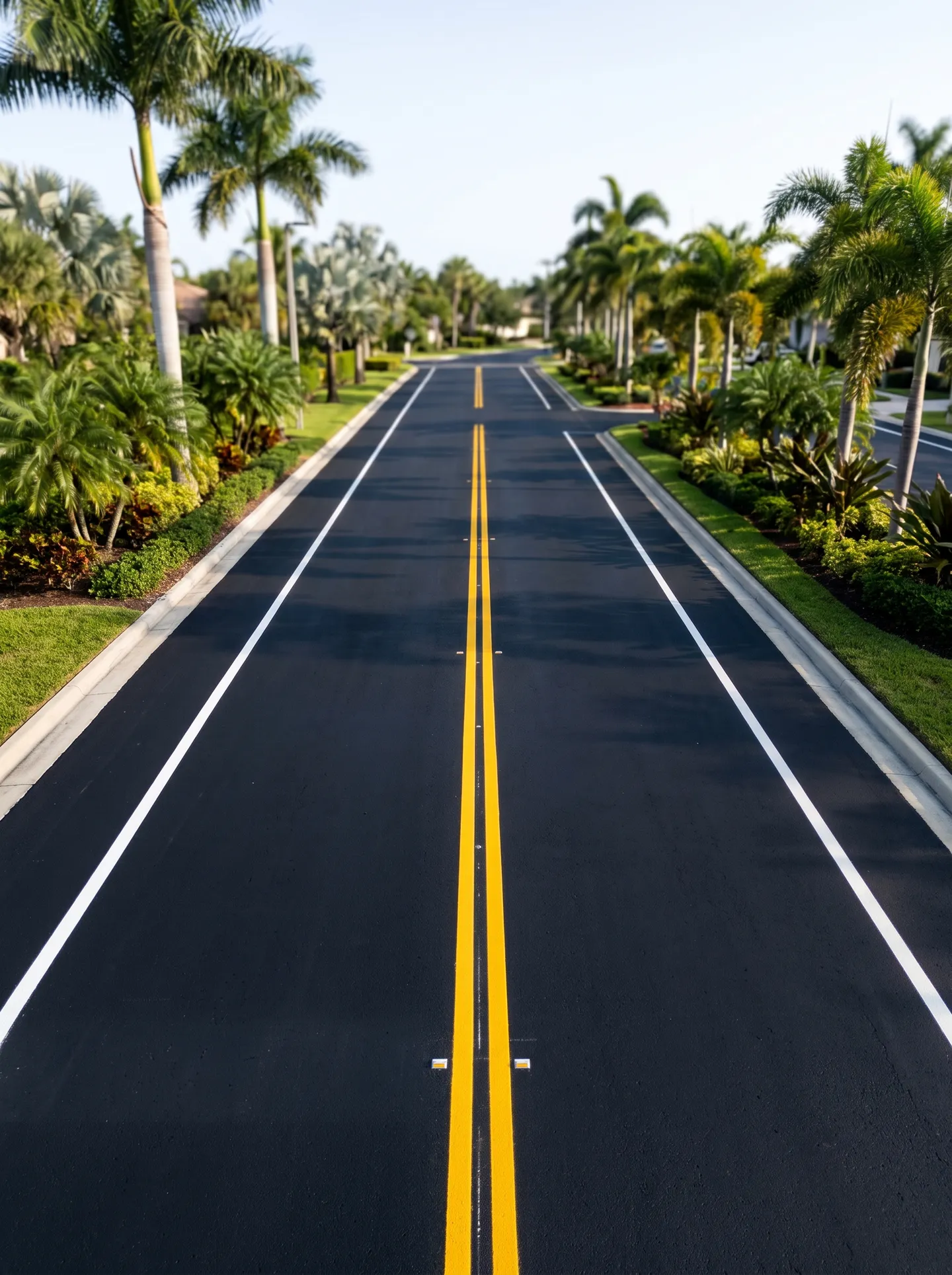
HOA Road Maintenance: How to Plan and Fund a Community Pavement Program
For most associations the roads are the single largest physical asset the community owns, and they are almost always private, which means the HOA owns both the upkeep and the bill. Private roads are frequently built below local DOT standards, so they call for a deliberate plan and a funded reserve set up well before the potholes arrive. Here is how a board gets out in front of it.
Plan and Fund the Project
- Start with a reserve study. Have the current condition of the roads, lots and sidewalks assessed and future needs projected, so the board knows what is coming and when it lands.
- Build a structured funding plan. Raise reserves through steady, incremental dues so the money is there before major work comes due, instead of surprising owners with a special assessment.
- Sequence preventive work first. Crack sealing and sealcoating cost a fraction of reconstruction and push it years down the road, so they belong ahead of the big-ticket work.
- Phase the capital projects. Spread the heavier capital work across budget cycles and community sections so the funding plan stays realistic and the streets stay usable.
Why Preventive Maintenance Pays
Regular crack filling and sealcoating stretch asphalt life and hold down the frequency and cost of major repairs. Neglect runs the other direction: potholes that damage residents' vehicles, litigation exposure that follows, and a faster slide toward full reconstruction. A single maintenance agreement covering the roads, parking, sidewalks and common areas keeps the whole community on schedule.
We build reserve-friendly scopes with boards under HOA lot maintenance and keep communities on schedule through a pavement management program. Request a reserve-friendly quote.
The Numbers Behind Preventive Maintenance
The case for planning ahead is arithmetic. Pavement preservation guidance holds that every dollar spent maintaining a road in good condition eliminates or delays roughly 6 to 10 dollars of future repair and reconstruction. The reason sits in the deterioration curve: a pavement drifts down slowly from new to about 70 on the 100-point condition index across roughly the first three-quarters of its life, then falls from 70 toward failure in the final quarter. Treat it while it still rates well and a light, low-cost treatment resets the clock; wait until it has dropped into that steep last stretch and the only option left is reconstruction. A proper crack seal holds 3 to 8 years and a sealcoat program every two to three years can more than double the life of the asphalt, so a board that spends early spends far less overall.
What a Reserve Study Actually Covers
A reserve study is the board's map, and pavement is one of its largest line items. A professional inventories the roads, lots and sidewalks as reserve components, assigns each a remaining useful life and a projected replacement cost, and hands the board a funding target that sits alongside the roof, the pool and the other big-ticket assets. From there the board raises reserves through steady, incremental dues so the money accumulates before the work comes due. That is how an association avoids the special assessment, the surprise lump-sum bill that lands on owners when reserves fall short of a project the study saw coming years out.
One Agreement for the Whole Community
Roads are rarely the only asphalt and concrete a community owns. A single maintenance agreement can cover the private roads, the parking areas, the sidewalks and the common areas together, so the whole property stays on one schedule and one plan. Bundling the work lets a board keep every surface on the same preventive cycle and see the full picture in one scope, instead of chasing each problem separately as it surfaces.
Common Questions
- Who is responsible for maintaining private community roads? The HOA. Private roads are often built below local DOT standards, and keeping them safe is a primary responsibility of the association.
- How much does preventive maintenance actually save? Roughly 6 to 10 dollars of future repair and reconstruction for every dollar spent maintaining pavement while it is still in good condition.
- When in a road's life is treatment most cost-effective? While it still rates well, in the first three-quarters of its life. Once condition drops into the steep final quarter, reconstruction is usually the only fix left.
- Can one contract cover the whole community? Yes. A single maintenance agreement can cover the roads, parking areas, sidewalks and common areas together, keeping the whole community on one schedule.
Related Guides
- How Central Florida's Heat & Heavy Rain Destroy Asphalt
- The Best Time of Year to Sealcoat in Central Florida
- All resource guides