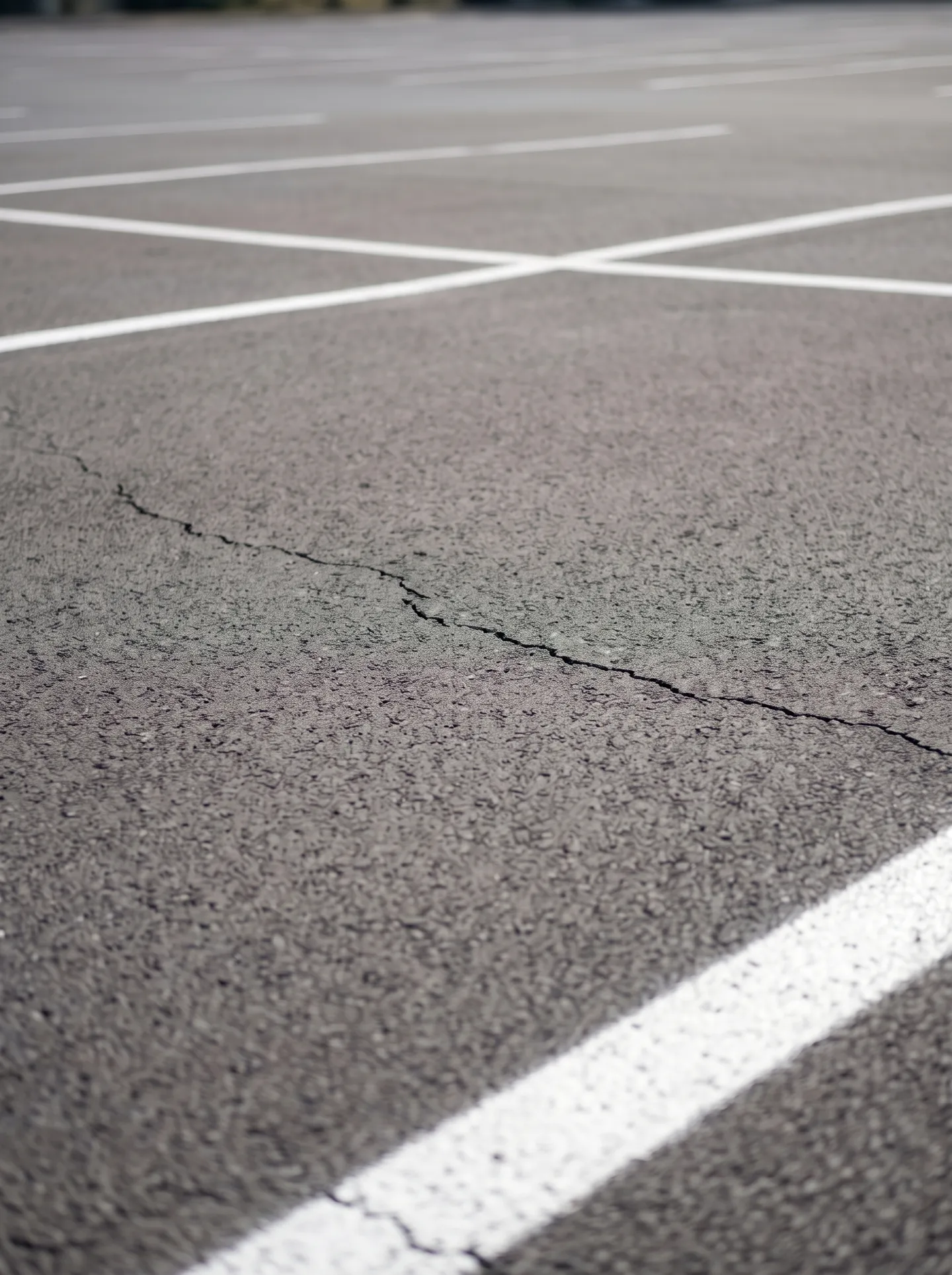
How Central Florida's Extreme Summer Heat & Heavy Rain Destroys Asphalt
National pavement lifespans assume a gentler climate than ours. Central Florida hands asphalt two punishing forces at once: relentless heat and UV from above, and heavy summer rain driving in through every crack. Understanding how each one works on the surface is the key to keeping a commercial lot from aging years ahead of schedule.
How Heat and UV Attack Asphalt
- Oxidation: UV and heat oxidize the asphalt binder and leave the surface gray and brittle. A brittle surface ravels, sheds aggregate, and opens the door to bigger failures.
- Softening and scuffing: low-90s summer heat softens asphalt, so turning tires and power steering scuff and rut the busiest turning areas, like entrances and drive aisles.
How Heavy Rain Finishes the Job
- Water intrusion: water getting in through cracks is the root cause of most pavement distress. It weakens the base, and a small crack marches to a pothole and then a crater.
- Ponding on flat ground: heavy summer downpours over flat, low-lying lots leave standing water that seeps to the base and speeds raveling and potholes wherever drainage is weak.
What Stops the Damage?
The defense is simple and far cheaper than the damage: sealcoating every two to three years to block UV and water, prompt crack sealing and repair to keep water out of the base, and sound drainage so rain leaves the lot instead of sitting on it. A pavement management program keeps all three on schedule. Request an assessment.
How Hot the Surface Actually Gets
Black asphalt is close to a perfect solar sponge. It absorbs roughly 85 to 95 percent of the sunlight that lands on it and runs 50 to 70 degrees hotter than the air above it, so on a low-90s Central Florida afternoon the surface can climb well past 140 degrees. Heat drives the chemistry. The hotter and sunnier the binder gets, the faster it oxidizes and stiffens, which is why a lot here ages on a different clock than the same asphalt in a cooler, cloudier state, and why the busiest turning areas give out first.
Why Central Florida Is Harder on Asphalt Than the National Average
National pavement lifespans are built around milder climates. Here two stressors run at full strength at the same time. Summer sun drives surface temperatures up and oxidizes the binder faster than in cooler states, while roughly 51 inches of annual rain, much of it in heavy summer storms, hunts out every crack and low spot. Heat opens the surface up and rain drives into it, so a lot that might last two decades elsewhere can age years ahead of schedule without maintenance.
How the Two Forces Work Together
Heat and water are worse as a pair than either alone. UV and heat first make the surface gray and brittle, and a brittle surface ravels and cracks. Those cracks are the doorway. When summer rain arrives, it runs straight through them into the base, softens it, and the softened base flexes under traffic until a hairline crack becomes a pothole and then a crater. Stop either half of that cycle and the pavement holds. That is what maintenance is designed to do.
The Signs Your Lot Is Losing the Fight
- Graying and fading: fresh asphalt is deep black. A gray, dull surface means the binder is oxidizing and the sealcoat has worn thin.
- Raveling: loose aggregate and a sandy, rough texture are the brittle surface shedding stone, an early warning that the asphalt is drying out.
- Scuffing and rutting: where vehicles turn and idle, scuff marks and shallow depressions are a sign heat has softened the asphalt beneath them.
- Standing water: puddles that linger after a storm mark low spots and weak drainage where water is reaching the base.
- Spreading cracks: hairline cracks that widen and interconnect are heat and water working the surface open. Sealing them early keeps water out of the base.
Common Questions
- Does Florida heat really shorten asphalt life? Yes. A black lot absorbs up to 90 percent of the sunlight on it and can sit well past 140 degrees on a summer afternoon, and that heat oxidizes the binder faster than in cooler states while softening the surface so it scuffs and ruts under turning traffic.
- Why is rain so damaging to a parking lot? Water is the root cause of most pavement failure. Central Florida's heavy summer storms drive into every crack and low spot, weaken the base, and turn a hairline crack into a pothole.
- How much can I slow all this down? A sealcoat every two to three years blocks the UV and water that do the damage, and prompt crack sealing keeps storms out of the base. Together they can more than double how long the surface lasts.
- Does drainage really matter that much? Yes. Sound slope and clear catch basins get the rain off the lot before it can pond and soak to the base, which is half the battle in a climate that delivers about 51 inches of rain a year.
Related Guides
- The Best Time of Year to Sealcoat in Central Florida
- Fixing Standing Water: Parking Lot Drainage Problems
- All resource guides