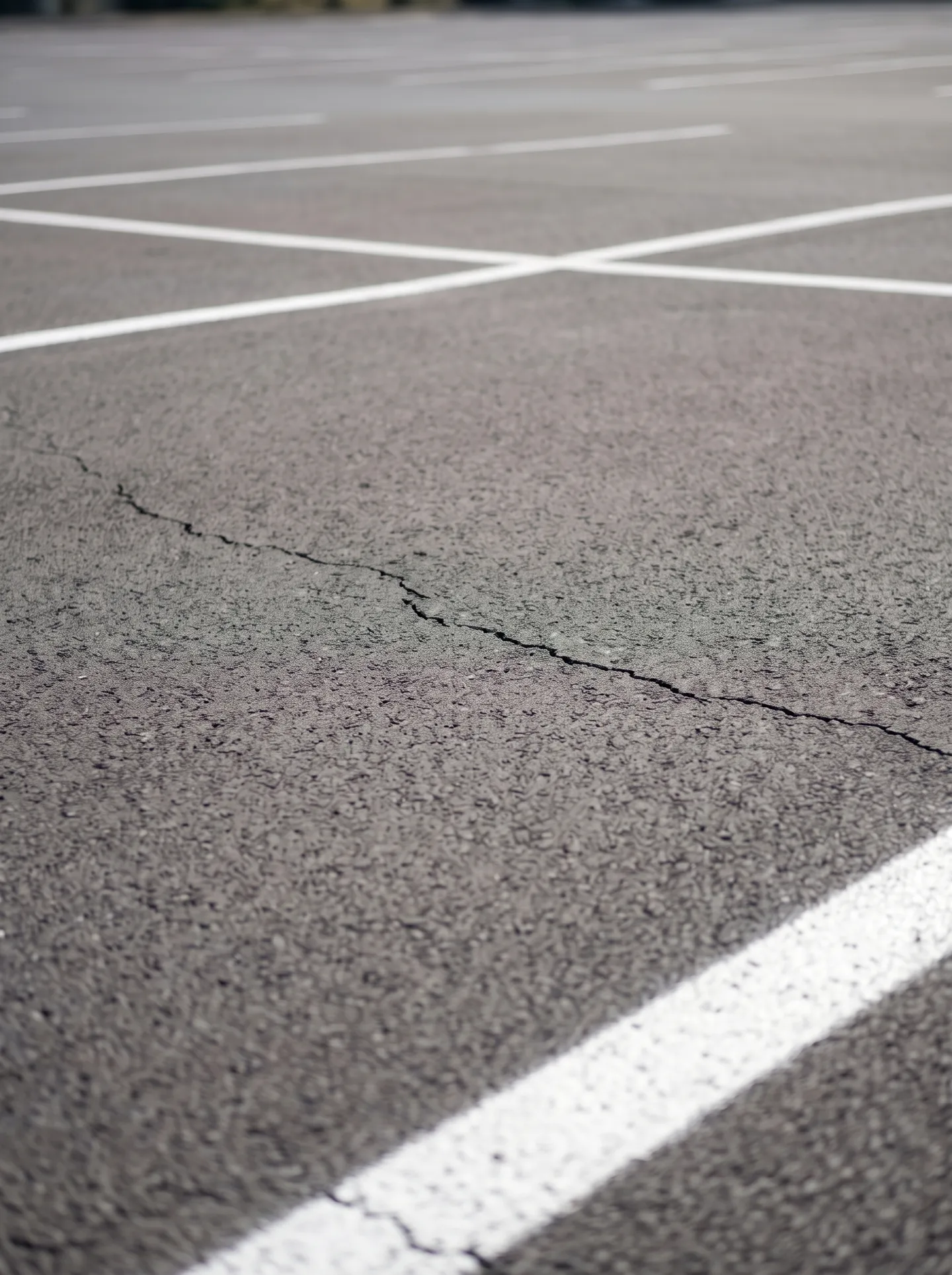
Sinkholes vs. Alligator Cracking: Identifying Severe Subbase Failure in Florida
Not all cracking means the same thing. In Florida that distinction can separate a routine resurfacing from a full reconstruction. Catching the difference early, ordinary surface fatigue versus a true subbase or sinkhole problem, is what keeps a manageable repair from turning structural.
Alligator Cracking: Surface and Base Fatigue
- What it looks like: interconnected cracks in a scaly, alligator-skin pattern, clustered in the wheel paths where the loads run heaviest.
- What it means: the base is flexing under traffic. Isolated patches can be cut out and full-depth patched. Widespread alligator cracking points to resurfacing, or to reconstruction once the base is gone.
Subbase Collapse and Sinkholes
- How the ground gives way: a lot can settle two ways. Cover-subsidence opens a slow, gentle circular dip as loose sediment ravels down into a limestone void; cover-collapse drops suddenly when the soil arch over that void finally lets go.
- Warning signs: a depression or hole near a catch basin often signals a collapsed pipe with water scouring the base from below. Fixing that reaches below the surface, into the drainage and the base itself.
What Each One Means for Repair
Surface fatigue over a sound base is a candidate for full-depth patching. True subbase failure, including water erosion from a failed drain, has to have the cause fixed first, usually drainage and catch-basin repair, and may still need full reconstruction by a paving contractor. We assess the base and tell you plainly which one you are facing. Request an assessment.
How to Read the Cracks
- Isolated single cracks: a lone crack is surface-level and the moment to act. Sealing it keeps water out of the base, and a proper crack seal lasts 3 to 8 years.
- Alligator pattern in the wheel paths: pavement engineers file this under load-related fatigue cracking, and condition surveys rate it low, medium or high by how wide the cracks have opened and whether the pieces have begun to rock loose. Low-severity areas can be cut out and patched; a high-severity, widespread pattern means the base itself is spent.
- A depression or dip: read the speed of it. A gentle bowl that deepens over months reads like cover-subsidence or a settling base; a hole that drops suddenly, especially near a catch basin, points to a collapsed pipe or a cover-collapse void, which is structural rather than cosmetic.
Why Florida Soils Raise the Stakes
Much of Central Florida sits on the same soluble limestone that gives the state its reputation for sinkholes. The Florida Geological Survey groups them into three kinds: solution sinkholes, where acidic groundwater slowly dissolves the rock; cover-subsidence sinkholes, where sediment ravels down into a void and dimples the surface; and cover-collapse sinkholes, the sudden ones that open with little warning. Heavy rainfall, prolonged drought, groundwater pumping, and the mechanical load of traffic can each trigger a collapse. The highest-incidence belt runs through Pasco, Hernando, and Hillsborough counties west of the Orlando metro, though the karst geology underlies the whole region. That is why we settle the question of subgrade stability before recommending any surface work. Resurfacing a lot with a base problem underneath only buries the failure for a season.
What Full-Depth Patching Actually Involves
When the base has failed in a contained area over otherwise sound pavement, the permanent fix is a full-depth patch. We saw-cut a square-edged section that extends at least a foot into sound pavement, remove material down to firm support, apply a tack coat to the vertical faces so the new asphalt bonds, and backfill with dense-graded hot-mix in compacted 4-inch lifts. Done right, the patch carries traffic like the pavement around it, and it is the answer whenever the failure sits in a contained pocket over otherwise sound ground.
Common Questions
- What are the three types of Florida sinkholes? The Florida Geological Survey names solution, cover-subsidence, and cover-collapse. Solution sinkholes dissolve open slowly, cover-subsidence dimples the surface as sediment slumps into a void, and cover-collapse drops all at once. The sudden kind is the one that most often takes pavement with it.
- Can a heavy delivery truck trigger a collapse? It can contribute. Mechanical loading is one of the recognized triggers, alongside heavy rainfall, drought, and groundwater pumping, since any of them can tip a soil arch that was already spanning a limestone void.
- Is alligator cracking the same as fatigue cracking? Yes. It is load-related fatigue in the wheel paths, and inspectors rate its severity low, medium, or high, which is what separates a patchable pocket from a base that has run out of life.
- A slow, shallow dip is forming. Should I worry? Watch its pace. A bowl that deepens gradually often traces to settling or cover-subsidence and can sometimes be stabilized, while a hole that opens fast is structural. We probe the base and tell you which one you have before any surface work.
Related Guides
- Who Is Liable for Pothole Damage in a Commercial Lot?
- Fixing Standing Water: Parking Lot Drainage Problems
- All resource guides