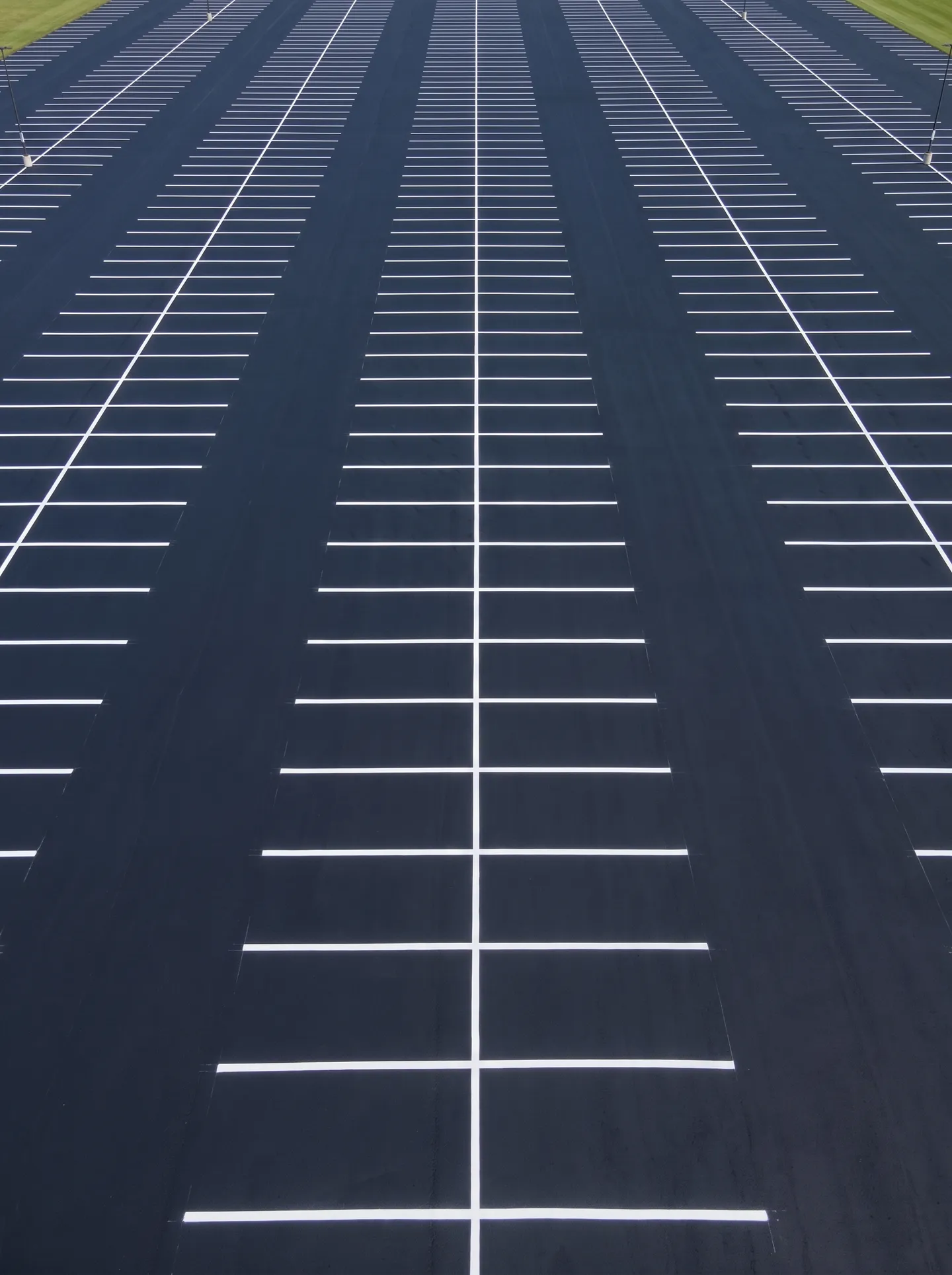
How Many Coats of Sealcoat Does a Commercial Lot Need?
One coat or two? For a commercial parking lot the answer is almost always two, and the reason is durability. A busy lot wears through a single thin coat fast, so the second coat is what turns sealcoating from a cosmetic refresh into real protection that carries the full cycle.
The Commercial Standard: Two Coats
The professional standard for a commercial lot is two thin coats, each applied at 0.15 to 0.20 gallons per square yard. A single coat can carry a low-traffic surface, but a lot taking real turnover needs two: better coverage, a longer-lasting finish, and more resistance to water, oil and UV. Two thin coats also beat one heavy coat, which holds moisture inside as it dries and can crack as it cures, leaving a weaker film than two measured passes that each set properly.
How Do the Coats Go Down?
- Prep first: we sweep the lot clean and repair cracks and distress, because sealer only bonds to a clean, sound surface.
- First coat: laid down evenly and left to reach its initial set, about two to four hours until it is dry to the touch.
- Second coat: applied perpendicular to the first, so the two passes cross and leave even, complete coverage with no thin spots.
- Then restripe: sealcoat buries the old lines, so the lot is restriped once the sealer has cured.
Cure Time and Downtime
After the final coat, most lots need about 24 to 48 hours before traffic returns, and on a humid or cloudy Central Florida day that can stretch toward 72 hours. Let cars back too early and the sealer lifts on their tires and leaves tracks, so we phase the work and time it to the weather. For more on that, see when you can drive on freshly sealed asphalt.
We sealcoat commercial lots with two coats of asphalt-emulsion sealer and schedule the downtime around your operation. Request a sealcoating quote.
What Goes Into Each Coat: Sand and Additives
A coat is more than sealer and water. We blend in clean silica sand, which gives the finished surface its skid resistance and fills the fine cracks a sealer alone would bridge over. The loading is matched to the pavement: roughly 2 to 2.5 pounds of sand per gallon of concentrate for a normal lot, rising to 4 to 4.5 pounds for a rough or porous surface that needs more texture. That sand is part of why two properly loaded coats outperform one heavy pour, because each pass lays down an even, gritty film rather than a slick, thick one that traps moisture underneath.
Why a Brand-New Lot Waits for Its First Seal
Coats aside, timing decides whether the first seal even holds. Fresh hot-mix asphalt still carries the paving oils that keep it soft, and those need to rise and evaporate before any sealer goes on top. The commercial practice is to wait about 30 days on new pavement, so seal a lot too soon and the coat traps the oils underneath and blisters or peels no matter how carefully the two passes were applied. On a new or freshly repaired surface we plan the first application around that window, then the lot settles into its regular cycle.
How the Coats Fit Your Maintenance Cycle
Two coats are the treatment, and sticking to a schedule is what makes them pay off. A properly maintained sealcoating program, applied every two to three years, can more than double the life of asphalt pavement for a fraction of what repaving costs. Each fresh two-coat application resets the clock on oxidation and water intrusion, and it is the ideal moment to restripe, since the sealer buries the old lines anyway. Pairing the seal with timely crack sealing keeps water out of the base between cycles.
Common Questions
- How much sand goes into the sealer? About 2 to 2.5 pounds of silica sand per gallon of concentrate on a normal lot, up to 4 to 4.5 pounds on a rough or porous surface, for skid resistance and to fill fine cracks.
- How long should new asphalt cure before its first seal? About 30 days on a commercial lot, so the paving oils evaporate. Seal it sooner and the trapped oils make the coat blister or peel.
- Why apply the second coat perpendicular? Crossing the second pass at a right angle to the first covers the thin spots the first coat leaves, so coverage is even and complete.
- When is a single coat enough? On a low-traffic surface, a back drive or an overflow area that sees little turnover. Anything taking real commercial traffic needs two.
Related Guides
- Coal-Tar vs. Asphalt-Emulsion Sealcoat: What to Use
- When Can You Drive on Freshly Sealed Asphalt?
- All resource guides