When Can You Drive on Freshly Sealed Commercial Asphalt?
The first question on almost every sealcoating job is the same: how soon does the lot reopen? For a business, every closed hour costs something. The short answer is about 24 hours before vehicle traffic, but the real answer depends on the conditions that day and on how the job is planned.
How Long Before the Lot Reopens?
- Vehicle traffic: allow about 24 hours of cure before you bring vehicles back onto a freshly sealed surface.
- Conditions matter: we seal when pavement and air are 50 to 55°F and rising with no rain for 24 hours. High humidity, shade and cooler temperatures all stretch the cure out longer.
- Foot traffic: light foot traffic can return sooner than vehicles, but follow the crew's call for the specific product and the day's weather.
Plan Around the Downtime
You rarely have to close the whole lot at once. We phase sealcoating section by section and work nights and off-hours, so part of the lot stays open while another part cures. Re-striping only happens once the seal has cured, so we sequence that in too. The result is a protected lot with minimal disruption to your operation.
Sealcoating is the highest-return maintenance you can put on a lot. Learn more about our commercial sealcoating, or see what it costs in Central Florida. Request a sealcoating quote.
Why Two Coats, and What Cures Between Them
A commercial seal goes on in at least two coats, and part of the wait falls between them, before the job is even finished. The first coat has to cure enough to hold before the second one goes down, often a couple of hours in good drying weather and longer when the air is humid. Both coats carry silica sand mixed into the sealer, commonly two to three pounds per gallon, which gives the finish its slip resistance, helps it dry, and holds up longer. Before the crew commits the second coat, a simple thumb test settles it: press down with roughly ten pounds of pressure and twist, and if nothing lifts, the first coat is ready. That inter-coat cure is part of why a full seal runs the better part of a day before traffic comes back.
What Slows the Cure Down?
- Humidity: humidity is the biggest variable here. Sealer cures by releasing water into the air, and humid air slows that release, which is why a cure that runs 24 to 48 hours in dry weather can stretch toward 72 hours on a muggy or cloudy day.
- Temperature: a warm pavement drives moisture off faster than a cool one, so cloudy days and shaded corners cure slowest. The surface temperature tells us when a section is ready, so we measure it directly rather than going by elapsed time.
- Sun and airflow: direct sun and open airflow pull moisture out fastest, so exposed center lanes firm up before the edges tucked under trees and buildings.
- Rain: no rain can fall within the first 24 hours. A storm on fresh sealer washes it off the surface, so through the summer rainy season we watch the forecast closely.
What Happens If Traffic Returns Too Early?
Bringing cars back before the seal has set is the most common way a fresh coat gets ruined. Tires lift the uncured sealer, leave tracks and power-steering scuffs, and thin the film exactly where the lot works hardest. A finish meant to protect the binder for the next two to three years ends up patchy from day one. Waiting out the full cure is far cheaper than resealing the damage.
How We Phase a Lot to Keep You Open
- Walk the lot with you and split it into sections that can close and reopen on their own.
- Seal the first section during your slowest hours, often overnight or on a weekend.
- Let each section cure the full window before it carries traffic, and hold the rest of the lot open in the meantime.
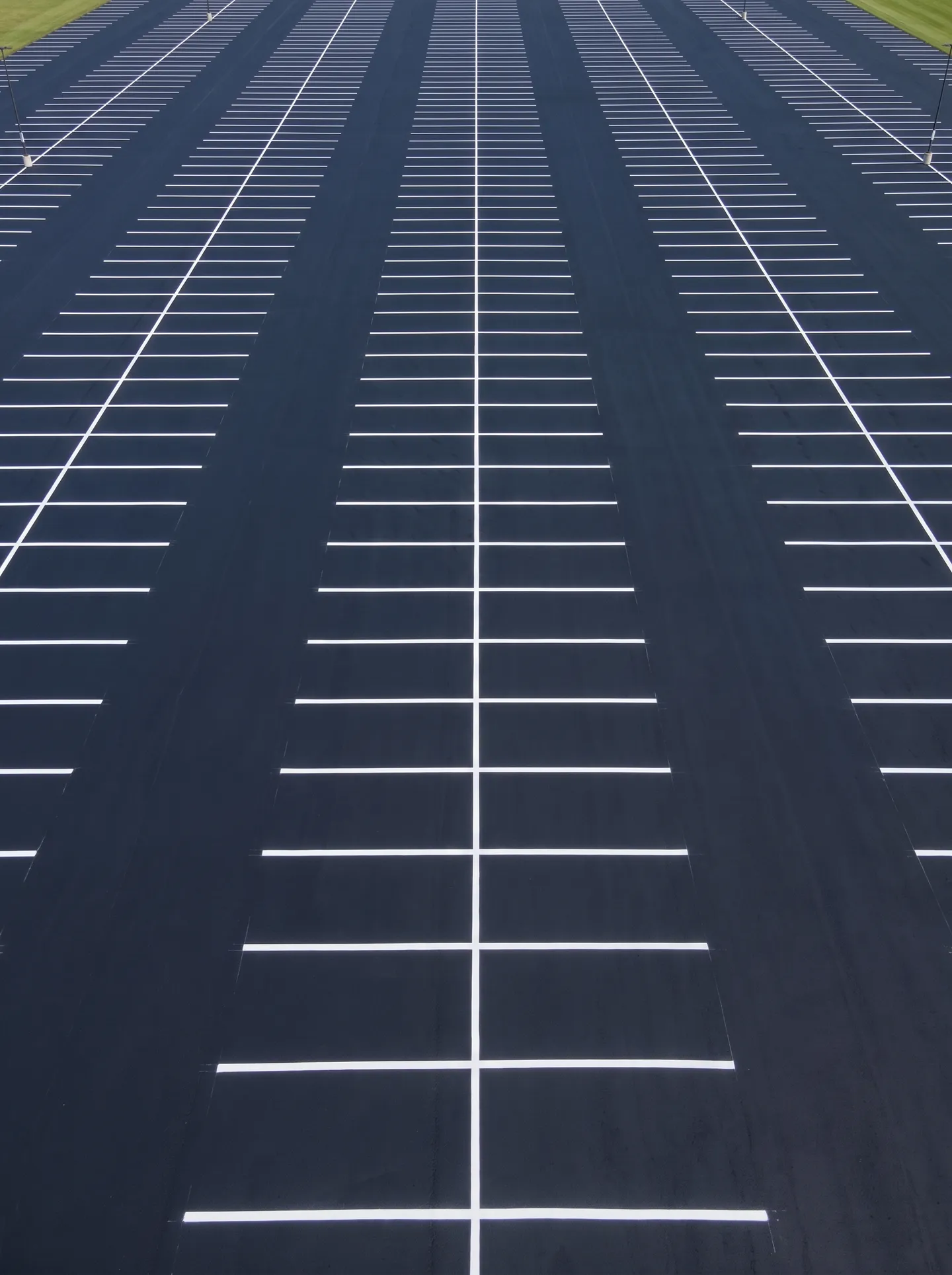
- Restripe each section only after its sealer has cured, since fresh sealcoat buries the old lines.
- Move to the next section and repeat until the whole lot is protected.
Common Questions
- Why apply two coats instead of one thick one? Two thinner coats cure faster and more evenly than a single heavy pass, and each one carries the sand slurry, so the finished surface is tougher and ready sooner than one deep layer would be.
- How does the crew know the first coat is cured enough? A thumb test. Pressing with about ten pounds of pressure and giving a twist, if nothing lifts onto your thumb, the coat has set enough for the next one to go down.
- Does the added sand make the lot slippery? The opposite. Silica sand, commonly two to three pounds per gallon, is mixed into the sealer for slip resistance, and it also helps the coat dry and wear well.
- How soon can the lot be restriped after sealing? Once the seal has cured, usually the following day. Fresh sealcoat covers the old lines, so striping always waits for the seal, which is why restriping right after a seal is the efficient sequence.
Related Guides
- The Best Time of Year to Sealcoat in Central Florida
- Commercial Sealcoating Cost Factors
- All resource guides