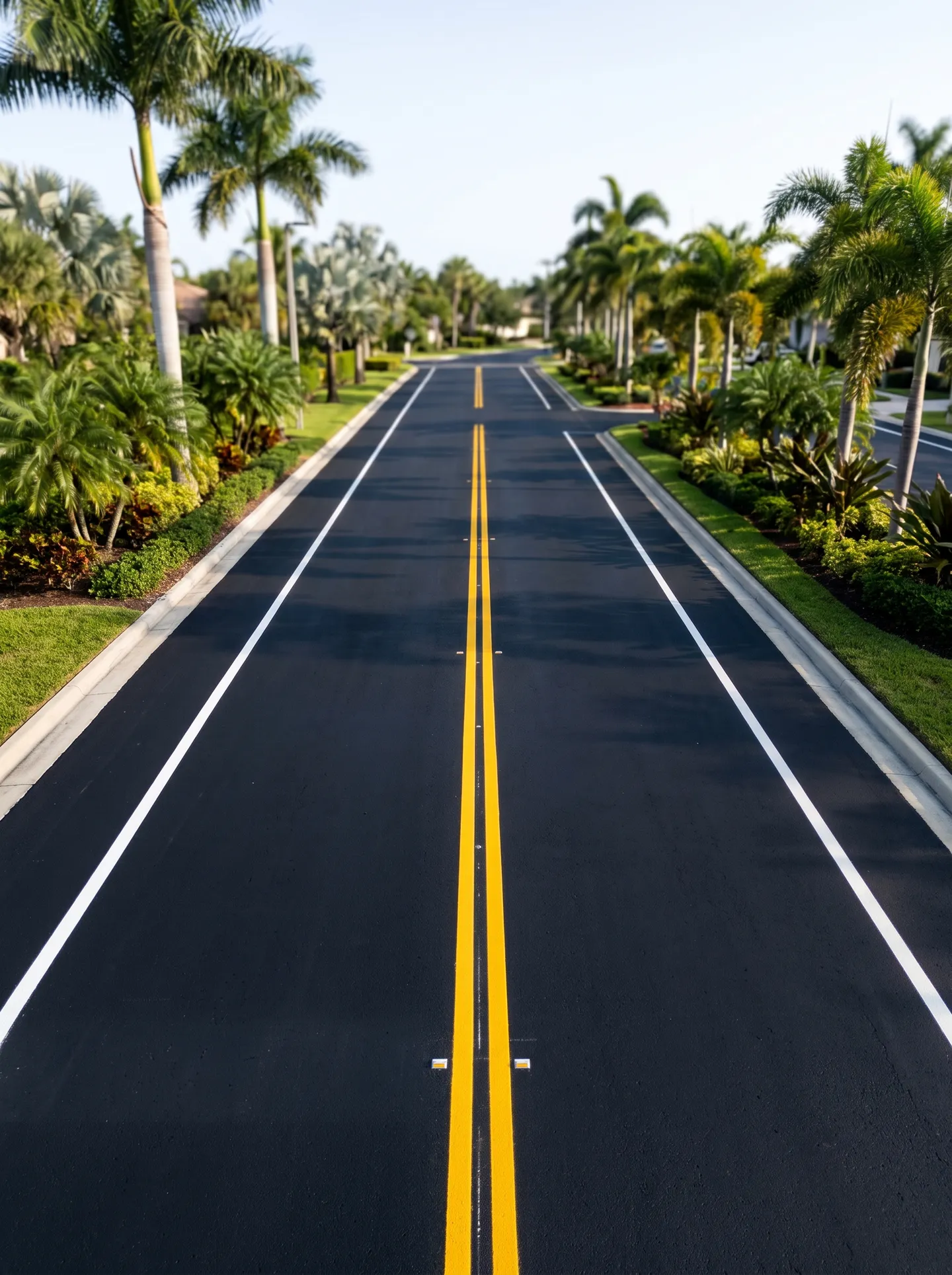
Apartment Complex Parking Lot Maintenance: Minimizing Tenant Disruption During the Work
An apartment lot is full around the clock. So the hardest part of working on one is never the asphalt. It is the residents. Every tenant needs a place to park every single night, which makes the plan matter as much as the work itself. Handled well, a complex gets striped, sealed and patched while most residents barely notice.
How Do You Minimize Tenant Disruption?
- Phase the work: close and finish one section at a time so the rest of the lot stays open, instead of shutting the whole complex at once.
- Give residents real notice: early, specific communication, dates, maps and the buildings affected, keeps complaints down and gets cars moved on time.
- Stage temporary parking: set aside overflow or adjacent parking for each phase so no resident is ever left without a spot.
- Work the right hours: schedule closures and curing for the hours the lot sits emptiest, and lay the striping only after the surface has cured.
Maintenance Beats Reconstruction
The least disruptive project is the one that was planned well. Keeping an apartment lot on a steady maintenance schedule, sealcoating, crack sealing and timely patching, pushes off the full reconstruction and the long closure that comes with it. A managed program also breaks the work into smaller, lower-impact visits.
We plan phased apartment work around the people who live there under pavement management, and handle the repairs and sealcoating in between. Request a phased quote.
A Communication Plan Residents Can Actually Follow
On an occupied lot, notice is half the job. Residents move their cars on time only when they know exactly what is happening and where. We work from a clear schedule: written notice ahead of each phase, a simple map of which sections and buildings are affected, and firm dates. Signage and reminders go up as each phase approaches. The clearer the communication, the fewer cars are left in a closing section and the fewer complaints reach the office.
Where Residents Park During the Work
No tenant should be left without a spot. Before a section closes we stage temporary parking, overflow areas or adjacent sections, so every resident in the affected buildings has somewhere to go for the night. Because we phase the work one section at a time, only a small part of the lot is ever out of service, and the rest stays open. Pairing phased closures with staged overflow is what lets a full complex keep functioning while its lot is striped, sealed and patched.
Keeping Accessible Parking Open Through Every Phase
One rule holds no matter how the phases fall: the accessible spaces cannot go dark. Federal ADA guidance treats a resurface or a restripe that reconfigures the lot as an alteration, which means the accessible count, aisles and route have to meet the current new-construction minimum when the lines go back down, and the accessible parking and its path to the door must stay usable while the work runs. Routine surface patching does not trigger that, but a phased seal-and-restripe does. So each phase keeps a compliant accessible stall and access aisle open nearby, and we set the temporary accessible spaces on firm, marked ground rather than leave a resident to cross a torn-up section. It is the part of the plan we lock down first.
Timing the Work Around a Lot That Never Empties
An apartment lot is busiest in the evening and overnight, so we schedule closures and curing for the hours it sits emptiest. That matters most for sealcoating, which needs about 24 to 48 hours to cure before traffic returns and can stretch toward 72 hours on a humid Central Florida day. Striping goes down only after the surface has cured, since fresh sealcoat buries the old lines. Sequencing each step around the daily rhythm of the community keeps residents parking and the work moving.
Why Steady Upkeep Protects the Budget Too
Phasing keeps residents parked, and a maintenance rhythm keeps the numbers predictable. Sealing and patching a lot on a schedule costs a fraction of the deep repairs that follow neglect, and it spreads spending into planned visits the property can budget for rather than a single emergency bill. A lot kept in good condition also reads as a cared-for community, which helps at lease-up. The disruption stays small because the work stays small.
Common Questions
- Does resurfacing or restriping trigger ADA upgrades at an apartment lot? It can. Federal guidance counts a resurface or a restripe that reconfigures the lot as an alteration, so the accessible spaces, aisles and route must meet the current new-construction minimum when the lines go back on. Plain surface patching is maintenance and does not.
- How much notice do residents get? Written notice ahead of each phase, with dates, a map of the affected sections and buildings, and reminders as the work approaches.
- How long does a freshly sealed section stay closed? Usually 24 to 48 hours before traffic returns, and closer to 72 on a humid day, because the coat releases its water more slowly when the air is already damp. We time those closures for the emptiest overnight hours.
- Does maintenance really reduce disruption? Yes. Steady sealcoating, crack sealing and patching hold off the deep failures that force long closures, and a managed program spreads the work into smaller, lower-impact visits.
Related Guides
- How Central Florida's Heat & Heavy Rain Destroy Asphalt
- The Best Time of Year to Sealcoat in Central Florida
- All resource guides