Top Signage Requirements for ADA Compliant Parking Lots in Orange & Osceola Counties
Striping an accessible stall is only half the job. Without the right sign, mounted at the right height, the stall is not compliant. Lots in Orange and Osceola counties follow the federal 2010 ADA Standards, so the signage rules hold the same in Orlando, Kissimmee and the cities around them.
What Does the Signage Require?
- The accessibility symbol: every accessible stall needs a sign bearing the International Symbol of Accessibility. The federal reserved-parking sign is the MUTCD R7-8.
- Mounting height: the sign mounts a minimum of 60 inches above the ground surface, measured to the bottom of the sign, so it stays visible above a parked vehicle.
- Van-accessible designation: van spaces carry an added 'Van Accessible' plaque, the MUTCD R7-8a, mounted with the R7-8 sign.
- Placement: accessible spaces sit on the shortest accessible route to the accessible entrance. Where a lot has four or fewer total spaces, the identifying sign is not required.
A Local Note
The federal 2010 ADA Standards set the sign, and Florida law adds to it statewide, so the same rules hold in both Orange and Osceola counties. Under Florida Statutes 316.1955 and 553.5041, each accessible space needs a permanent above-grade sign showing the International Symbol of Accessibility with the caption 'PARKING BY DISABLED PERMIT ONLY,' and any sign erected after October 1, 1996 must state the penalty for illegal use. That detail carries weight: where no compliant above-grade sign is posted, an officer can only issue a warning rather than a citation, so the sign is what makes the space enforceable. The dimensions and counts behind the stalls themselves are in our Central Florida ADA compliance guide. We serve commercial lots across Orlando and Kissimmee.
We handle the signs, stalls and striping together under ADA compliant paving and striping. Request an ADA assessment.
Why the 60-Inch Mounting Height Matters
The 60-inch minimum is measured to the bottom of the sign, and it exists so the sign clears the roof of a parked vehicle. Mount it lower and a van or truck in the stall hides it, which defeats the purpose and fails the standard. Height is the detail inspectors catch most often, because a sign can carry the right symbol and wording and still sit too low. We set the posts so the sign reads from the drive aisle with a vehicle in the space.
How the Sign Works With the Striping
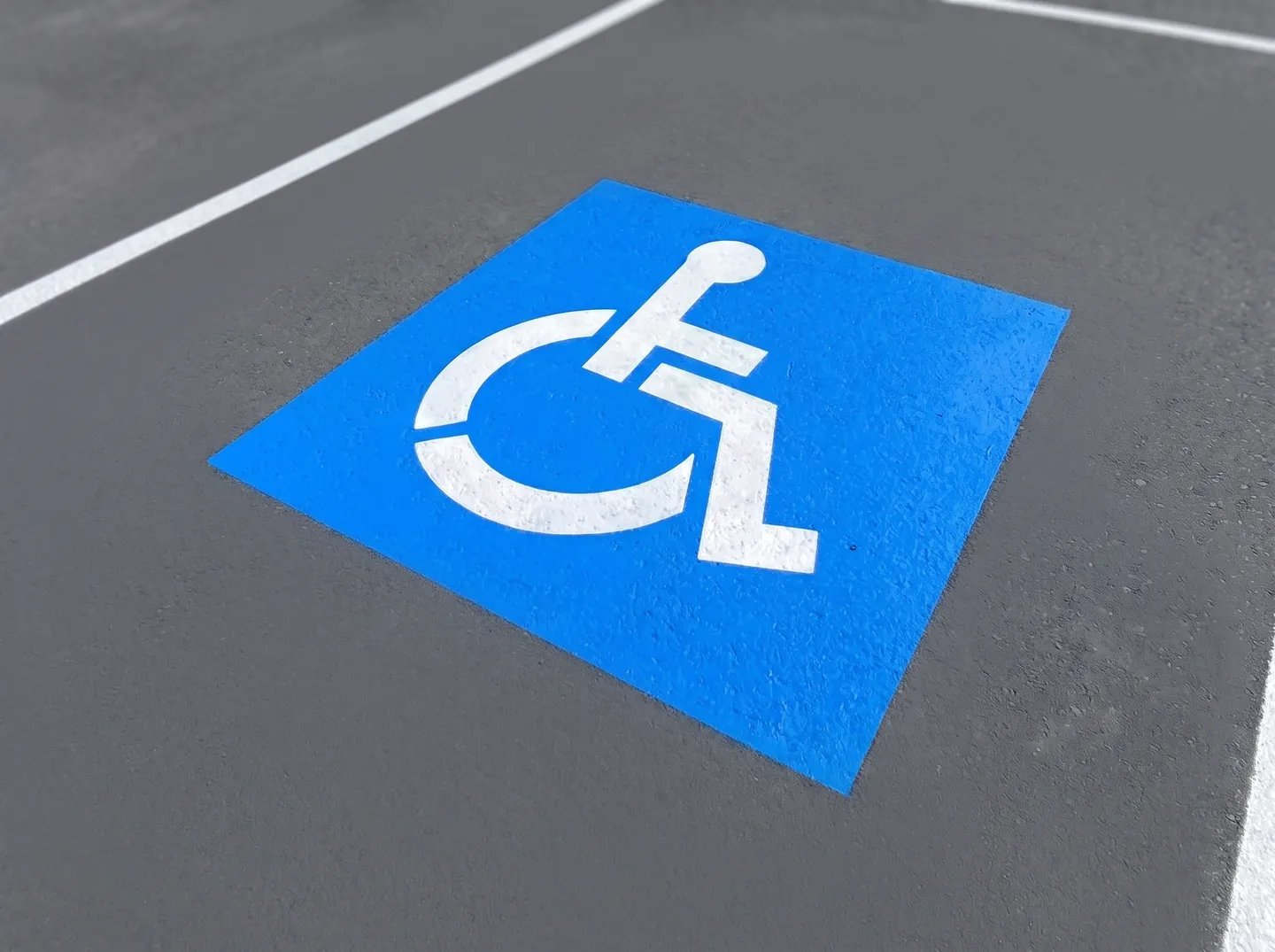
The sign and the paint do the job together. Below the sign sits the accessible stall with the International Symbol of Accessibility painted in it, a striped access aisle marked to discourage parking, and a spot on the shortest accessible route to the entrance. Van stalls carry the added 'Van Accessible' designation on the sign and the wider aisle on the ground. Where a lot has four or fewer total spaces, the identifying sign is not required, though the accessible stall itself still is. We handle the signs and the striping as one scope so the two always match.
Keeping Signs Legible and Enforceable
A sign that is faded, bent or knocked down stops backing up enforcement, and a stall no one respects is a stall that fails its purpose. Central Florida sun is hard on sign faces and on the painted symbol below them, so both need refreshing on a schedule. Counties and municipalities can also add their own fine-notice language, so it is worth confirming the current local wording when you replace or repost a sign. We check the signs whenever we restripe accessible stalls.
What a Missing or Wrong Sign Costs
Two separate exposures ride on that sign. Under Florida law a missing above-grade sign drops enforcement to a warning, so the space stops deterring anyone from taking it. Under the federal ADA an accessible space without a compliant sign is a Title III access violation the property owner answers for, whether it arrives as a complaint or a demand letter. Against either one the fix is inexpensive: a correct sign, at 60 inches, on the shortest route to the door. We audit the posts whenever we lay out or refresh the accessible stalls, so the sign and the marking pass together.
Common Questions
- Can a driver be ticketed if the accessible-parking sign is missing? In Florida, no. State law lets an officer issue only a warning when there is no compliant above-grade sign, so the posted sign is what turns the stall into an enforceable one.
- Do van spaces need a different sign? Yes. A van space carries the 'Van Accessible' plaque, the MUTCD R7-8a, mounted with the standard R7-8 reserved-parking sign.
- What has to be printed on the sign in Florida? The International Symbol of Accessibility and the caption 'PARKING BY DISABLED PERMIT ONLY,' plus the penalty for illegal use on any sign posted after October 1, 1996.
- Are the rules different in Orange versus Osceola County? The federal 2010 ADA Standards and Florida's statewide sign law hold the same across both. A city can still add its own enforcement or fine-notice wording, so confirm any local addition before you repost.
Related Guides
- Central Florida ADA Parking Lot Compliance
- Trip Hazard Liability: When Do Sidewalk Cracks Need Repair?
- All resource guides